
 サイトマップ
 各課のご案内
 施設のご案内
 お問い合わせ
Animals of the River Plains and Mountains Edge
Move away from the steep mountain valleys, and follow the Tedori River to the plains. Here you'll find an alluvial plain, scattered with sand and stones.
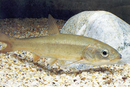
Big-Scaled Redfin
Tribolodon hakonensis
Found from high up in the upper-stream, down to the river estuary, this fish is known as having one of the widest ranges among freshwater fish. During spring both sexes bear three bright red stripes down their sides.
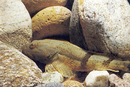
Fourspine Sculpin
Cottus kazika
Lurking in the gaps between rocks at the bottom of the river, this species of sculpin uses its wide mouth to eat small fish such as sweetfish. In legend it is said that the fish can turn into stone, where it awaits the passing of prey before springing back to life.
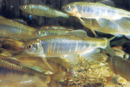
Pale Chub
Zacco platypus
Although native to some parts of Japan, this fish is considered an introduced species to Ishikawa Prefecture. It is said to have swum from nearby habitats, mixing with schools of migrating sweetfish to end up here. It can be found from the lower to mid-stream areas of the river.
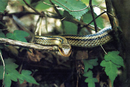
Japanese Four-Lined Ratsnake
Elaphe quadrivirgata
As the name suggests, this snake is known for the four stripes that run the length of its body. There have even been cases where the stripes have merged, turning the entire snake black. In Japanese these black snakes are called ‘karasu hebi’ – crow snake. It is a non-venomous species, and can be found throughout Japan.
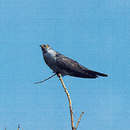
Common Cuckoo
Cuculus canorus
With a total length of 35cm (13.8 in), the cuckoo can be seen throughout summer, by rivers and in forest groves. It is well known for being a brood parasite, where it lays its eggs in the nest of other birds such as reed warblers and shrikes. It migrates to Africa during the winter months.
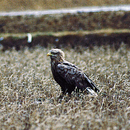
White-Tailed Eagle
Haliaeetus albicilla
This massive bird of prey has a total length of 85cm (2.8 ft). During winter it often hides in the grassy sandbars along the lower-basin of the Tedori River. Even within Ishikawa Prefecture there are very few spots where the eagle can be seen, making the Tedori River extra special.
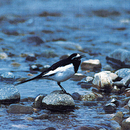
Japanese Wagtail
Motacilla grandis
With a total length of 21cm (8.3 in), this little wagtail can be seen at the mid to lower-stream areas, including the river estuary. They can often be seen flitting from rock to rock along the river's edge. It was considered a candidate for the Prefectural bird.
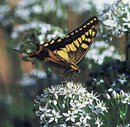
Old World Swallowtail Butterfly
Papilio machaon
This butterfly, also called the common yellow swallowtail, can be seen fluttering through grassy areas and fields, sipping nectar from herbs and flowers as it goes. It has a very wide distribution, including parts of Europe, Asia, the Middle East, and North America.
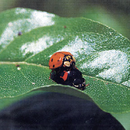
Asian Ladybeetle
Harmonia axyridis
Often found on silverberry trees, this ladybeetle, including its nymphs, eats aphids. It has an incredibly varied appearance, but typically is red with black dots. Although native to East Asia, the Asian ladybeetle has been introduced to many other countries worldwide.
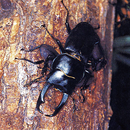
Little Stag Beetle
Dorcus rectus
The most common species of stag beetle in Ishikawa Prefecture, this not-so-little bug can reach a maximum length of 5.8cm (2.3 in). They can often be seen feeding from the sap of the willow tree during mid-summer. Although usually black, some appear reddish-brown.
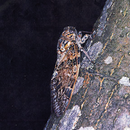
Kempfer Cicada
Platypleura kaempferi
This cicada is known for its relatively quiet call and small size. It can be seen from July to August, and its small round shells can usually be found near the base of trees, often covered in mud. It has a mottled brown appearance for camouflaging with trees.
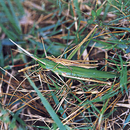
Oriental Longheaded Grass-hopper
Acrida cinereal
With the females being significantly larger than males, this species of grasshopper is the biggest in Japan. It can be found in grassy areas from the beginning of the rainy season, until late autumn. Males make a chirping noise when flying.