 サイトマップ
 各課のご案内
 施設のご案内
 お問い合わせ
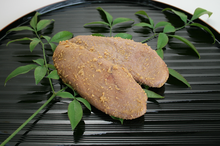
Pickled Blowfish Ovary
A delicacy available only in Mikawa
Mikawa is located in the middle of Kanazawa and Komatsu, and was called Motoyoshi during the time of the Kaga Domain. Motoyoshi became affluent through the trade of the kitamaebune ships, and was chosen as the location of the Prefectural Office for a short period.
In the midst of this sea trade route, Mikawa could receive kelp, herring, and sardines from the north, and blowfish from Kyushu and Shimonoseki in the south. These items were salted and fermented in bran, koji (a kind of mold), and fish sauce, becoming an important source of protein during the harsh winters. Nowadays there are six businesses still making fermented sea foods, including blowfish, herring, mackeral, sardines, filefish, etc. Amongst these the pickled blowfish ovaries – made also in neighbouring Kanaiwa and Ono – is a delicacy that can be found only in this part of Japan.
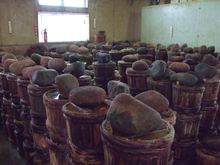
Inside of blowfish is a deadly poison called tetrodotoxin, which is especially concentrated in the livers and ovaries. Blowfish ovaries are typically removed and incinerated, however predecessors discovered that fermenting the ovaries in salt for 6 months to a year, and then fermenting them for a further two years in bran miso entirely removed all the poison. Of course there is a possibility that not all the poison is removed, so these days all products are rigorously tested before being sold, so you can safely eat them.
The best way to eat fermented blowfish ovaries is to first remove the surrounding bran, thinly slice it and eat it as-is in small amounts. Or, slice it thickly (0.5 – 1cm), wrap it in foil and bake it. Eat this with rice and maybe even some sake for a beautiful aromatic meal.
While you're in Mikawa, definitely give it a try!