
 サイトマップ
 各課のご案内
 施設のご案内
 お問い合わせ
Matto Castle
In the following exhibition you will find stickers on each panel, corresponding to the relevant sections below.
Feel free to tap the section(s) you wish to view from the menu above.
L1: The Second Excavation of the Matto Castle Ruins
In 2007, a 674m2 area of land at the northwest point of the Matto Castle Park was excavated prior to development. Things like bent railroad tracks, water channels, and pits were discovered.
Most of the excavated artefacts are from the 15th and 16th centuries – from the Sengoku Period (Period of Warring States). They include luxury goods such as iron glazed tenmoku tea cups imported from Seto, stoves used in tea ceremonies, celadon (green glazed) and white porcelain imported from China as well as armor plates, and knife handles.
There were also many burned artefacts found. Including rice, there were other grains such as millet, and beans. It is thought that they were stored here for emergency use. Many of the artefacts contain traces of fire, and it is believed that a fire occurred during the 16th century, after which it was abandoned.
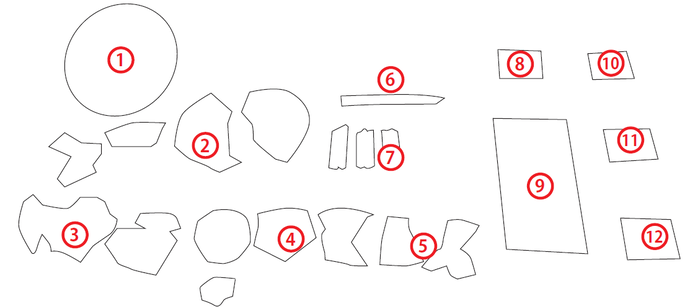
1: Hajiki Pottery Plate
Hajiki pottery made locally. It’s rare to find a complete plate such as this.
2: Seto Ash Glaze Plate
At this time this kind of plate is being produced in high quantity.
3: Seto Iron Glazed Tenmoku Tea Cup
Excavated from the Matto Castle Ruins Site, from the Sengoku Period (1467 - 1615). It is a tea ceremony tea cup made in the middle of the 16th century, around the time large kilns began being used. Traces of heat damage from a fire remain on the surface.
4: White Porcelain Dish
From the 15th century. Imported from north China.
5: Celadon Porcelain Dish
From the 15th century. Imported from China.
6: Kozuka Knife
A type of knife that attaches to the sheath of a sword. It is thought to be an important item of a high-ranking samurai.
7: Armor Plates
Excavated from the Matto Castle Ruins Site. This type of armor was made by connecting armor plates together with leather or braided silk, along with small leather plates. They were used for a type of simple armor called goishi iyozane. These plates are 1.9cm wide, 5.5cm long, and 2mm thick, and were common from the Nanboku-cho Period (14th century) to the early Muromachi Period (late 15th century).
8: Millet (Sorghum) Charcoal
9: Rice Charcoal
Excavated from the Matto Castle Ruins Site, from the Sengoku Period (1467 - 1615). 97% of the rice found at the site is Japonica rice, therefore it is believed that this was not regular grain stored by peasants, but army reserves of quality rice. The rice turned to charcoal in a fire.
10: Soy Bean Charcoal
11: Millet Charcoal
12: Red Rice Charcoal